Izalco or Santa Ana: Which One to Hike?
Santa Ana or Izalco for your one hike day? A guide's honest comparison of the two Cerro Verde volcanoes, difficulty, reward, logistics and who suits each.
 Written with Carlos Hernández, Santa Ana Volcano tour guide & hiking specialist
Short answer
For most first-timers, Santa Ana wins. It is a moderate 6.9 km round trip to a turquoise crater lake at 2,381 m, inside a daily guided group system. Izalco, the black cone called the Lighthouse of the Pacific, is a separate and notably steeper hike with no lake at the top.
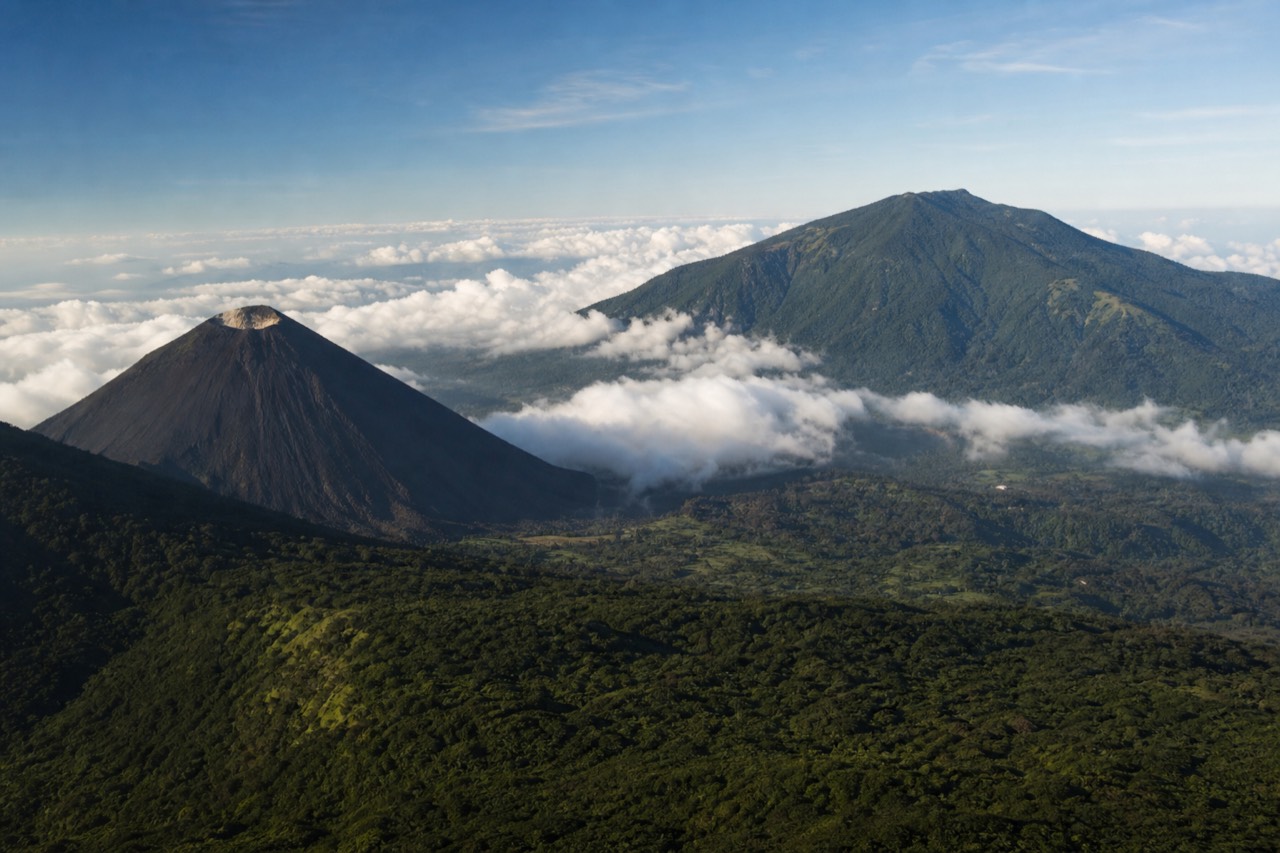
The question usually gets asked at the first viewpoint. My group catches sight of Izalco, that impossibly clean black pyramid rising out of the green, and someone says: wait, should we be climbing that one instead? I have been guiding on these mountains since 2018, and I love that the question exists, because it means both volcanoes are doing their jobs. One seduces from a distance. The other rewards you at the top.
Here is the honest comparison, the one I give on the trail, with the fact that I know Santa Ana far better than its dramatic neighbour stated up front.
Which volcano should a first-timer hike?
Santa Ana, and it is not close. You get the highest summit in El Salvador at 2,381 m, a moderate 6.9 km round-trip trail, an organized daily group ascent, and a turquoise crater lake as the payoff. Izalco is a magnificent shape but a steeper, separate climb with a bare cone at the top.
| Santa Ana (Ilamatepec) | Izalco | |
|---|---|---|
| Summit reward | Turquoise, sulfuric crater lake | The black cone itself, no lake |
| Height | 2,381 m, highest in the country | Lower black cone beside it |
| Difficulty | Moderate (AllTrails 4.8 stars) | Notably steeper |
| Trail | 6.9 km round trip, ~470 m gain, rocky near the top | Separate, steeper route from Cerro Verde |
| Structure | Daily guided group, fixed window | Its own separate hike arrangements |
| On the featured guided day | Yes, admission included | No |
| Best single moment | First sight of the lake over the rim | Standing under the "Lighthouse of the Pacific" |
The deciding factor is the reward-to-effort ratio. Santa Ana asks for 3 to 4 hours of moderate walking and pays you with a colour most people have never seen in nature. Izalco asks for a harder climb and pays you with the climb itself. Both are legitimate trades. Only one of them is the obvious first date.
If you have settled it and want the day handled end to end, the simplest version is the guided one: pickup from San Salvador, El Tunco or El Zonte, the Santa Ana ascent with admission included, then lunch at Lake Coatepeque. When you are ready, book the guided day tour and check live availability and prices on Viator. It runs at 4.9 stars across 869 reviews with groups capped at 20, usually nearer 10.
What does Santa Ana give you for the effort?
A summit that pays in full. Two hours of steady climbing puts you on the rim of an active volcano, looking down at an acidic turquoise lake steaming at its edges, with Lake Coatepeque spread out below and Izalco posing to the side. The descent takes about 1.5 hours, and vendors sell paletas at the top.
The trail earns its moderate grade honestly. It starts gently from the Cerro Verde side, works upward through vegetation, then turns rocky and open for the final stretch to the rim. Total gain is about 470 m because the park already sits at roughly 2,000 m. One 2025 reviewer's verdict has become my standard answer on difficulty: not super easy, but not as difficult as anticipated. Trekking poles rent for about $2 at the trailhead and are worth it for the loose rock coming down; the full grading breakdown is in how hard the hike really is.
Then there is the summit itself. The crater lake is the reason this volcano anchors the country's hiking scene, and the official tourism board treats it accordingly at elsalvador.travel. You cannot swim in it, you cannot approach the water, and it does not matter. Thirty minutes on that rim is the postcard of the whole trip.
The structure helps more than people expect. A local guide is mandatory, the daily group leaves in the late-morning window, and the crater closes around 13:00. First-timers read that as restriction; on the mountain it works as rhythm, and it puts you on top in the day's most reliable weather.
What is the Izalco hike actually like?
Steeper, starker and more of a commitment. Izalco is the bare black cone that sailors named the Lighthouse of the Pacific, and it is climbed as a separate hike from the Cerro Verde side, not as an add-on to Santa Ana. There is no crater lake waiting at the top, the mountain itself is the destination.
I will be straight about my own experience here: my thousand-plus travellers, by my own count, have been on Santa Ana. What I know of Izalco comes from years of looking at it from the neighbouring trail, from the park, and from what climbers and local guides report. The consistent picture is a hike that is notably steeper than Santa Ana, on the dark volcanic surface that gives the cone its silhouette. That surface is exactly what makes the mountain magnetic in photos, a pyramid with no forest softening it.
The history is the romance. Izalco built its perfect cone through long-running eruptions whose glow was visible from the ocean, which is how the Lighthouse of the Pacific name stuck. Today it stands quiet next to its bigger sibling, and the best free view of it is from the Santa Ana trail itself, where it sits in your photos most of the way up.
Should nobody climb it? Of course not. Strong hikers who have already done Santa Ana, or who care more about the ascent than the summit view, come back down from Izalco glowing. The point of this page is sequencing. As a first Salvadoran volcano, it is the harder path to a smaller payoff. There are also ambitious park days that chase multiple summits, which I wrote about in three volcanoes, one day, but that is a plan you graduate into, not one you start with.
What does a Santa Ana day look like on the clock, and where would Izalco fit?
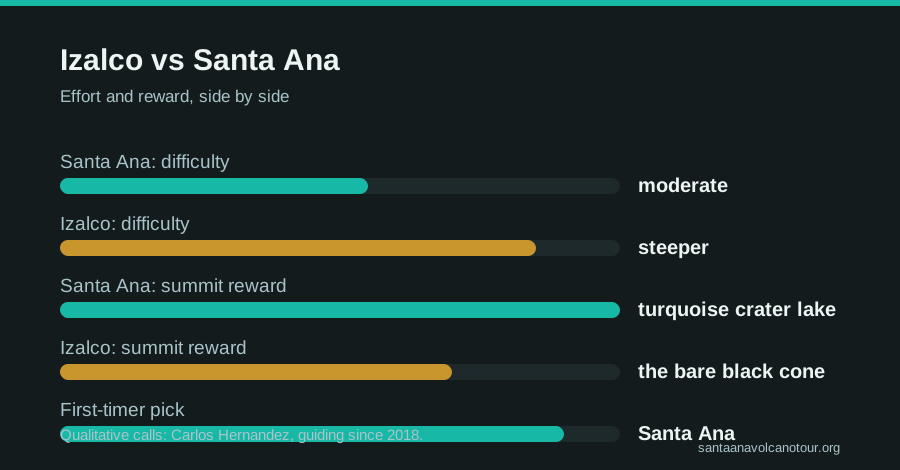
Santa Ana runs on a published rhythm: park access from about 7:00, the group forming between 9:30 and 10:00, last start 11:00, roughly 2 hours up, 30 to 45 minutes at the rim, the crater closing about 13:00, about 1.5 hours down. Izalco is a separate outing arranged at the park and does not slot into that morning.
Seeing the two side by side on a timeline settles a lot of arguments at the viewpoint. Santa Ana is a clockwork day. Izalco is a decision you make separately, and trying to bolt it onto the same late-morning window is how people end up climbing neither properly.
| Time (allow) | Santa Ana | Izalco |
|---|---|---|
| ~7:00 | Park access opens; fees in cash | Same gate, same cash rule |
| Before the group | Poles rented, viewpoint visited, layers on | Arrangements for the separate hike made on site |
| ~9:30 to 10:00 | Daily group forms with local guides | Not part of the daily Santa Ana group |
| 11:00 | Last start, no exceptions | Its own outing, its own plan |
| ~2 h | Ascent through forest to the rocky upper trail | Notably steeper climb on the bare cone |
| ~30 to 45 min | Rim and crater lake, paletas from vendors | The cone itself is the summit; no lake |
| ~13:00 | Crater area closes | Its own timing, settled at the park |
| ~1.5 h | Descent, poles out on loose rock | Steep descent on volcanic surface, budget more |
| Afternoon | Lake Coatepeque lunch on the guided day | Your own afternoon |
The right-hand column is deliberately sparse, and that is honest. Santa Ana publishes its window and its trail times; Izalco is a separate arrangement whose details you settle at Cerro Verde on the day, and I will not invent a timetable for it. What I can say from the neighbouring trail is that it is a steeper, longer proposition than the moderate 3 to 4 hours Santa Ana asks.
For a first day, the left column is the one to trust. It puts you on the rim in the day's best light and hands you the afternoon at Coatepeque. If Izalco is calling, the answer is a second day, not a squeezed one, and I lay out how that sequencing works in the volcano itinerary guide.
How steep is steep, in terms a hiker can actually feel?
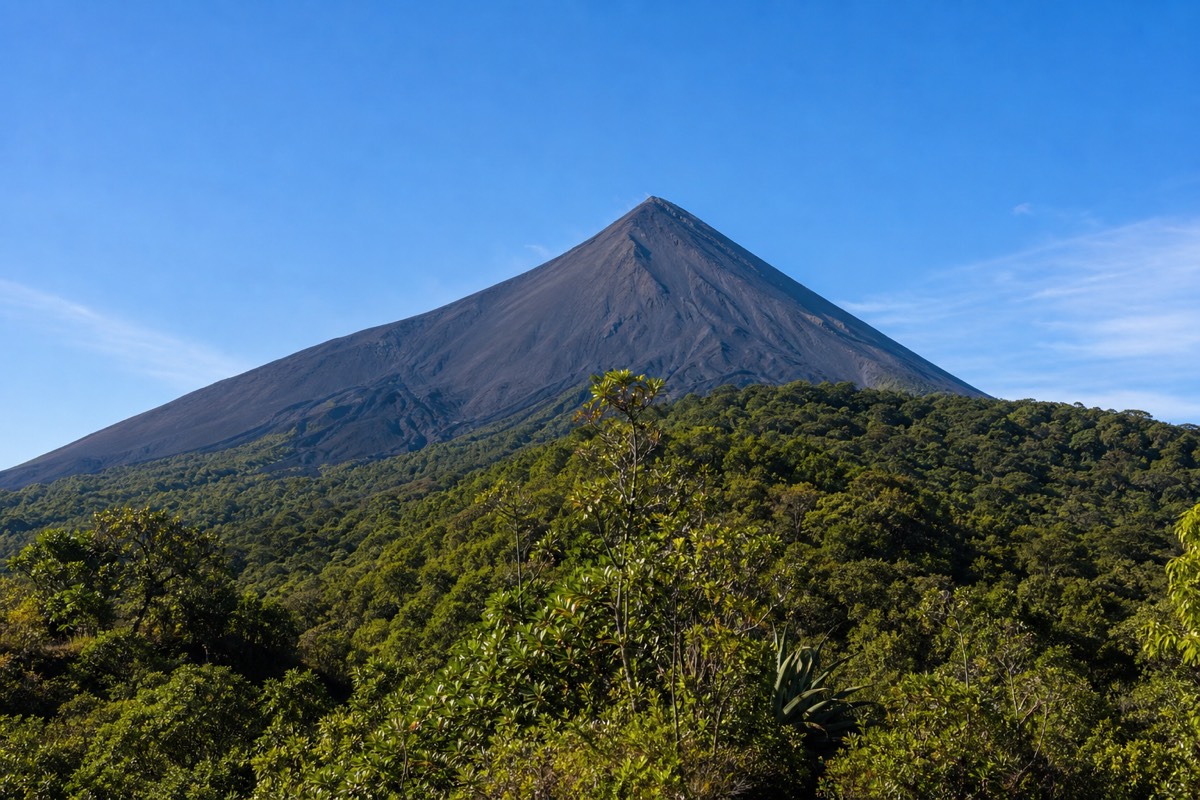
Santa Ana gains about 470 m over a 6.9 km round trip and takes about 2 hours up, which is a moderate, steady grade with one rocky push near the rim. Izalco is notably steeper on a bare volcanic surface, with nothing gentle about the middle. If Santa Ana is a firm walk, Izalco is a climb.
I have paced groups up Santa Ana since 2018, more than a thousand travellers by my own count, so the ladder below is my read on effort rather than a measured profile. It runs from the easiest part of the day to the hardest, and Izalco sits above all of it.
| Rung | What it feels like | Where it bites |
|---|---|---|
| Lower Santa Ana trail | Steady walking through vegetation, conversation possible | Warmth more than gradient |
| Upper Santa Ana trail | Open, rocky, the real work of the ~470 m gain | Loose rock, wind, the last push to the rim |
| Santa Ana descent | About 1.5 hours, knees and footing | The loose upper section; poles ~$2 earn their price here |
| Izalco ascent | Notably steeper, on the dark cone surface | Sustained gradient, no lake to pull you up |
| Izalco descent | Steep going on volcanic material | Footing and control the whole way |
Notice where most people are surprised on Santa Ana. It is not the top. It is the descent, when the loose upper section arrives while legs are already tired and gravity is doing the pacing. That is why the rented poles get praised in nearly every 2025 to 2026 review, and why I put ankle-support shoes at the top of every packing list. On Izalco, that same challenge is the whole hike rather than one section of it.
The other thing hikers feel is the reward curve. On Santa Ana the effort builds toward the rim and the lake, and even the rocky push has the crater as its finish line. On Izalco the effort is the point. Some travellers love that; a fair number do not, and it is better to know which you are before you commit a day. AllTrails grades the Santa Ana route moderate at 4.8 stars, with the public data at alltrails.com, and I break the trail into sections in how hard the hike really is.
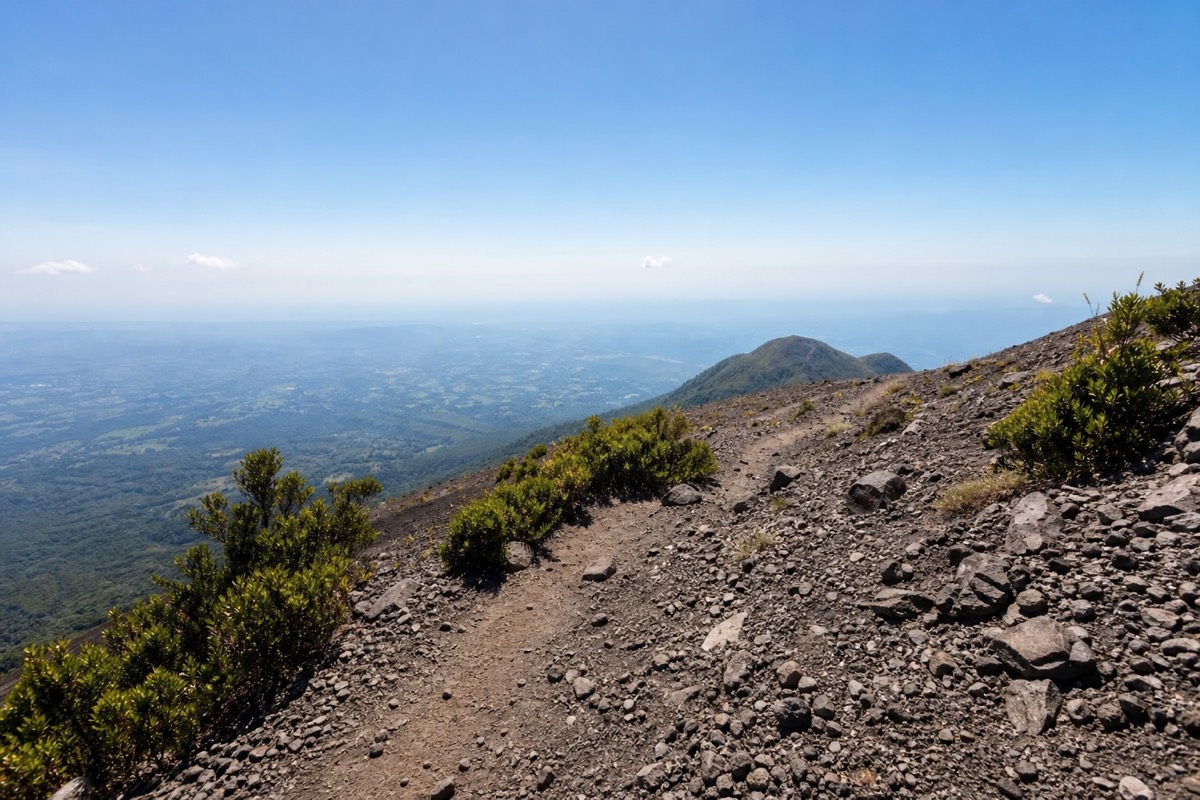
What gear changes if you pick Izalco over Santa Ana?
Not the list, the emphasis. Both hikes want 2 litres of water, ankle-support shoes, sun cover, a wind layer and small US bills for the park. Izalco puts more weight on grip, poles and control on a steep bare surface, so treat the shoe and pole lines as non-negotiable rather than recommended.
Packing for Santa Ana is a solved problem. Water, layer, shoes, sun, cash, and the ~$2 poles from the trailhead. Packing for Izalco uses the same bag with the dial turned up on everything that touches the ground. Here is how I would weight it, framed as allowances rather than anyone's official kit list.
| Item | Santa Ana | Izalco |
|---|---|---|
| Water | 2 litres, per MARN guidance | 2 litres at minimum; steeper means thirstier |
| Shoes | Sturdy, ankle support recommended | Grip and ankle support, no compromises |
| Trekking poles | Rent ~$2, praised for the descent | Bring or rent them; the descent is the crux |
| Wind and sun layers | Summit cooler and windier than base | Exposed cone, same rule with less shade |
| Small US bills | Fees, guide, parking, poles, paletas | Fees and parking, arrangements on site |
| Snacks | Light; paletas at the summit | Bring your own and do not count on vendors |
| Pace | Set by the group and its guides | Set by you and your own arrangement |
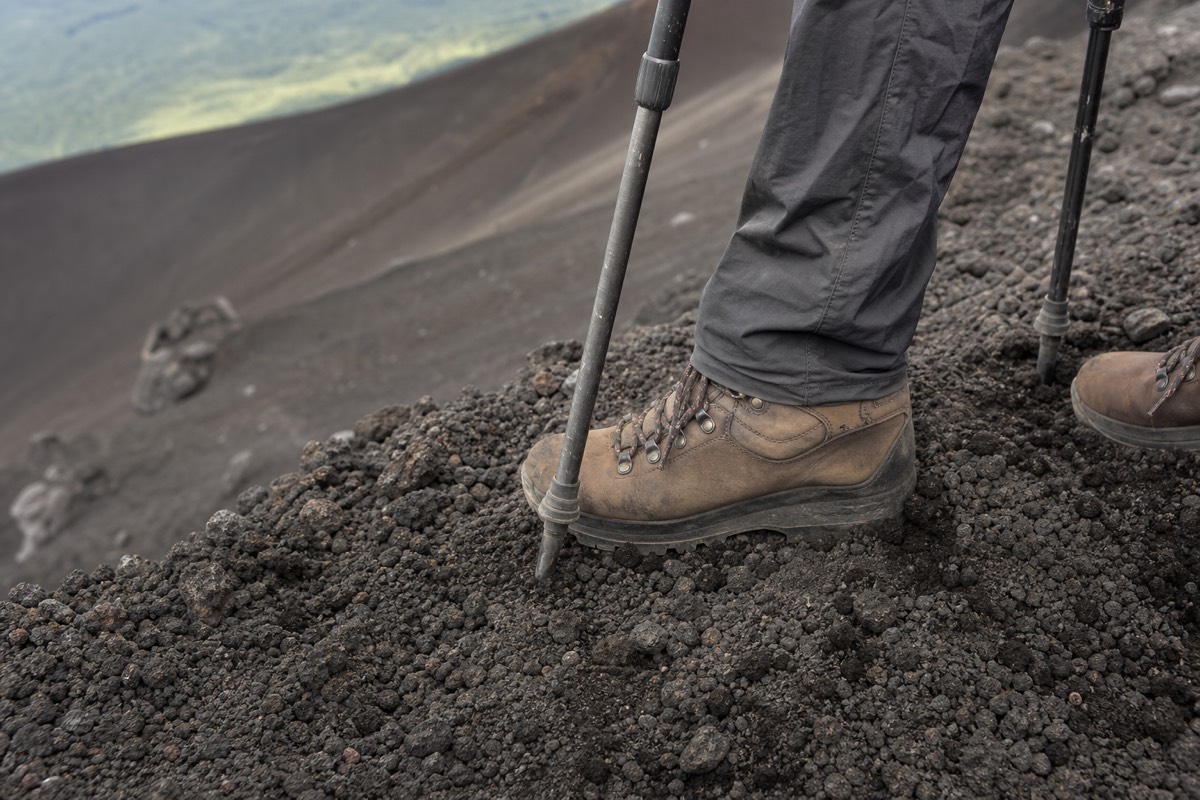
The line I would underline is the poles. On Santa Ana they are a comfort that most people are glad they rented. On a notably steeper descent over dark volcanic material they become part of your braking system, and going without them to save two dollars is a poor trade. The same goes for shoes: trail runners get many people up Santa Ana, but I would want real boots on the cone.
The other change is psychological. Santa Ana comes with a group, guides front and back, and a fixed clock that does your pacing for you. Izalco is your own outing, arranged at the park, and the discipline that the group supplies on the bigger volcano has to come from you. Bring more water than you think, start with a plan for the descent, and read the full Santa Ana list in what to bring on the hike as the baseline before you add anything.
How much cash does each hike cost at the park?
Both start with the same cash-only fees at Cerro Verde: park entrance $3 for foreigners or $1.50 for Salvadorans, parking $3. Santa Ana adds the mandatory local group guide at about $4 per person, or roughly $35 to $40 for a private one, plus ~$2 poles. Izalco's guide arrangement is made on site.
Cash is the constant on this saddle. There is no card machine at 2,000 m, no ATM, and every fee is collected in person. Bring small US bills and both hikes are cheap; forget them and neither happens.
| Cost line (USD) | Santa Ana | Izalco |
|---|---|---|
| Park entrance, foreigners | $3 | $3, same gate |
| Park entrance, Salvadorans | $1.50 | $1.50 |
| Parking | $3 per vehicle | $3 per vehicle |
| Guide | ~$4 pp in the daily group; ~$35 to $40 private | Arranged on site as a separate hike |
| Trekking poles | ~$2, rented at the trailhead | Rent or bring your own |
| Bus 248 from Santa Ana city | ~$0.70 one way | Same bus, same trailhead |
| Independent 2025 all-in report | ~$17 for the DIY day, ice cream included | No comparable figure I would trust |
| On the featured guided day | Admission included with pickup and lunch | Not included |
Santa Ana's DIY number is real and low, and it assumes you slept in Santa Ana city and rode the 7:30 to 7:40 bus. From San Salvador or the coast the transport becomes the cost, because no public route makes the window; the tour-versus-DIY math is laid out in what the day costs and the volcano without a guide explains why the ~$4 guide line is not optional.
Izalco's column is honest rather than complete. The gate and parking fees are the same because it is the same park; the guide and timing are settled at Cerro Verde on the day, and I will not print a figure I have not verified. Budget cash generously and ask at the park.
For anyone who wants the Santa Ana side of that table to vanish, the guided day tour folds admission, pickup and the lake lunch into one booking. That is the version I point first-timers toward, not because the DIY day is bad, but because the transport line, not the fees, is what breaks it for most people.
Can you do both volcanoes in one trip, and in what order?
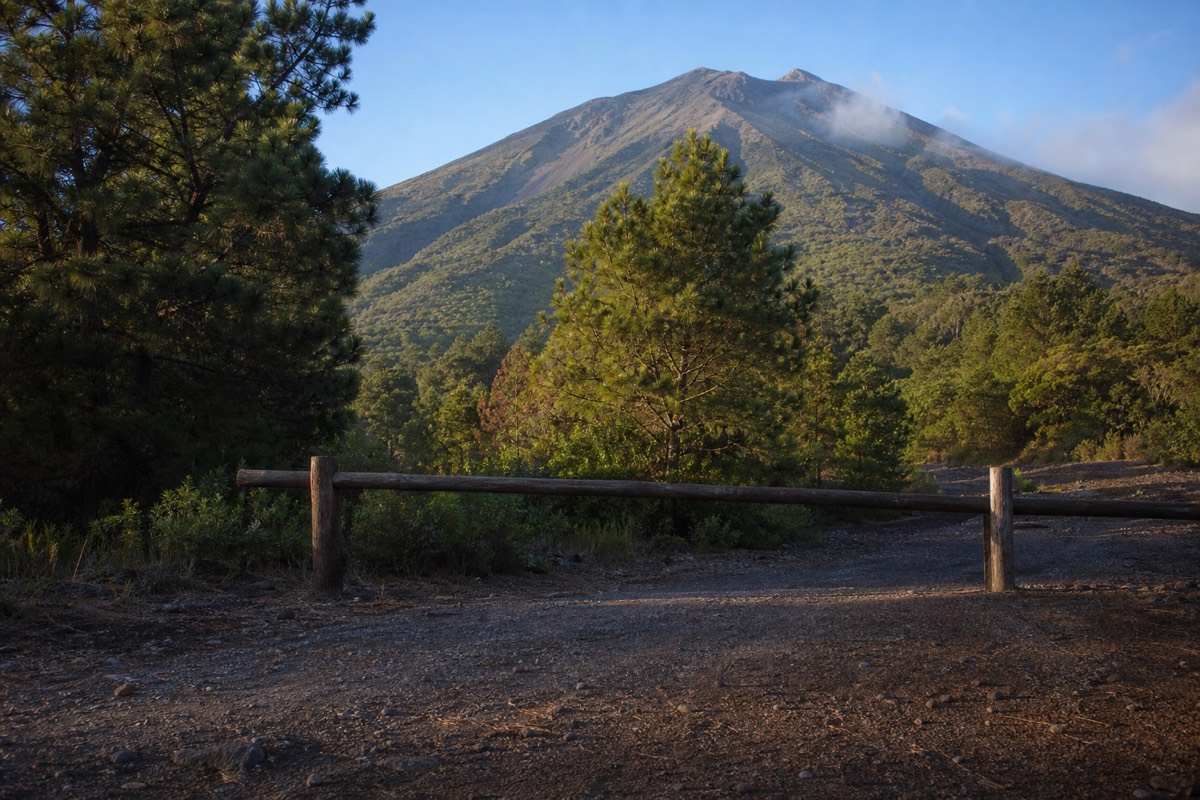
Yes, on separate days, Santa Ana first. Climb Santa Ana inside its daily group window, ideally with the Coatepeque lunch afterwards, then come back for Izalco as its own outing arranged at the park. That order gives you the lake, the cone views from the trail, and a fair sense of your legs before the steeper climb.
The two mountains share a parking lot, which makes people assume they share a day. They do not, at least not comfortably, and the reason is the clock. Santa Ana's group leaves late morning and its crater closes about 13:00; the whole hike is 3 to 4 hours inside that frame. Izalco is a separate, steeper outing that you arrange on site. Stack them and something gives, usually the lake stop, sometimes the summit.
Sequence them instead. Day one is Santa Ana in the group, with the rim, the crater lake, the free Izalco views from the trail, and the swim at Coatepeque afterwards. That day tells you two things: whether you enjoyed the loose upper section, and whether your knees have opinions about a 1.5 hour descent. Both answers matter before you commit to a mountain that is steeper from bottom to top.
Day two, if the answers were good, is Izalco. You already know the park, the cash rules and the drive, so the logistics are half done. Base yourself in Santa Ana city and the bus 248 gets you to Cerro Verde both mornings for about $0.70 each way; the town itself is worth the nights, and where to stay in Santa Ana has the options. Base yourself in the capital and the first day works best as the guided pickup, with the second day a drive.
There is also the ambitious version, chasing more than one summit in a single park day, and I wrote about it honestly in three volcanoes, one day. It is a plan for people who have already done Santa Ana and know what the mountain asks. As a first visit, one volcano, one lake, one good night's sleep, and the black cone waiting for another day is the shape that never disappoints. The wider trip planning, including how many days the west of the country deserves, is in how many days in El Salvador.
Who suits which volcano?
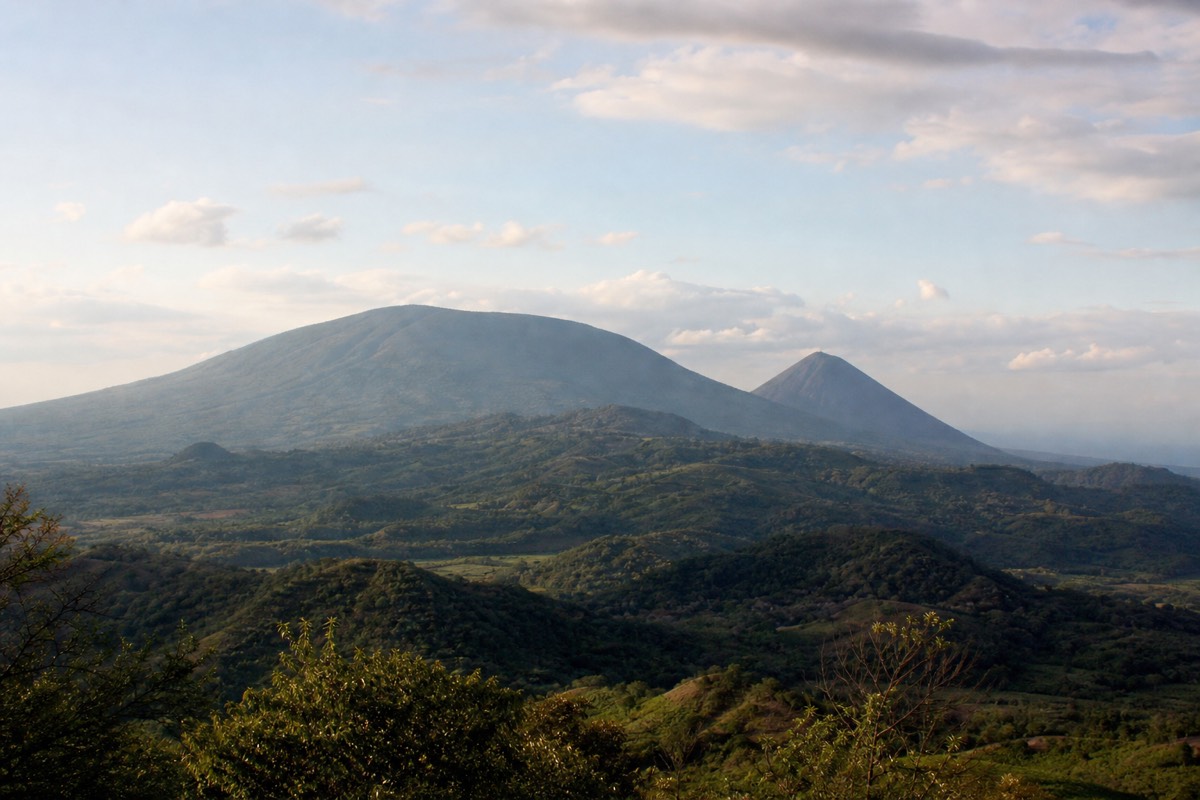
Santa Ana suits nearly everyone in reasonable shape: first-timers, families with capable teens, travellers on a one-shot day from San Salvador or the coast. Izalco suits fit, experienced hikers who want steepness and drama, ideally as a second Salvadoran summit rather than a first.
| You are... | Better pick | Why |
|---|---|---|
| A first-time visitor with one hike day | Santa Ana | Moderate trail, organized group, crater lake reward |
| Traveling from San Salvador, El Tunco or El Zonte | Santa Ana | The guided day picks up from all three |
| A strong hiker who has already done Santa Ana | Izalco | New angle, harder climb, the famous cone underfoot |
| Nervous about fitness | Santa Ana | Rated moderate; poles and steady pacing carry most people |
| A photographer chasing the iconic cone | Santa Ana first | The best Izalco views are from the Santa Ana trail |
| Chasing a multi-summit park day | Both, eventually | See the three-volcano approach, then plan around the windows |
One health note that applies before any of this: the featured guided day is not wheelchair accessible and is not recommended for travellers with back problems, heart conditions or during pregnancy. The same self-screening logic applies to any volcano hike here, and doubly to the steeper one.
How do the logistics differ between the two hikes?
They share a base but not a system. Both start from Cerro Verde National Park at about 2,000 m, with cash-only fees. Santa Ana runs on the organized daily group, roughly 9:30 to 11:00 last start with the crater closing about 13:00. Izalco is its own separate outing arranged at the park.
| Logistics | Santa Ana | Izalco |
|---|---|---|
| Starting point | Cerro Verde National Park | Cerro Verde National Park |
| Park entrance | $3 foreigners / $1.50 Salvadorans, cash | Same park, same cash-only rule |
| Guide setup | Mandatory local guide, ~$4 pp in the daily group | Separate hike, arranged on site at the park |
| Timing system | Starts ~9:30 to 10:00, last start 11:00, crater closes ~13:00 | Its own outing, plan it at the park |
| Featured tour coverage | Fully covered, admission included | Not included |
| Time on trail | 3 to 4 hours round trip | Longer, steeper day, budget more |
Getting to the shared trailhead is its own subject, from the ~$0.70 bus 248 out of Santa Ana city to the roughly 1 to 1.25 hour drive from the capital, and it is covered in how to get to the volcano. Whichever mountain you choose, the transport math is identical, and cash for the park is non-negotiable.
The last word I give groups at the viewpoint is this: you do not actually have to choose between seeing Izalco and climbing Santa Ana, because Santa Ana hands you both. The black cone stands in your photos the whole way up, and the turquoise lake waits at the top as the thing Izalco cannot offer. Climb the one with the lake. Admire the one with the silhouette. That split has never once disappointed anyone I have taken up the mountain.